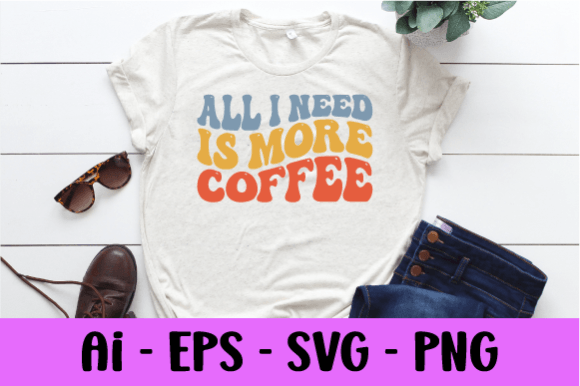
Reviewing the All I Need is More Coffee Wavy Tee
As a designer who spends half my life staring at digitized files and the other half watching needles punch through fabric, I have learned to be skeptical of trendy graphics. We see thousands of design assets cross our desks, but few translate well from a flat screen to a textured finished product. When I first pulled up the All I Need is More Coffee Wavy T-shirt file, my initial reaction was one of cautious optimism. The retro wavy aesthetic is undeniably popular right now, bridging the gap between nostalgic seventies vibes and modern minimalist typography. But popularity does not always equal stitchability.
The mood this design creates is relaxed and approachable. It speaks to the universal language of caffeine dependency, which makes it an incredibly safe yet effective choice for a wide range of clients. For an Etsy seller or a small shop product creator, this is valuable because it reduces the friction of customer decision-making. People understand the joke immediately. However, from a technical standpoint, the wavy text layout presents specific challenges that we need to address before hitting the start button on our machines.
Real-World Application: The Custom Sweatshirt Test
To truly evaluate this machine embroidery design, I decided to test it in a scenario that mimics real client work. I imagined a local boutique owner wanting a line of cozy, oversized crewneck sweatshirts for their fall collection. They needed something that felt handmade but looked professional enough to justify a higher price point. This is where the All I Need is More Coffee Wavy T-shirt design shines, provided you manage the execution correctly.
I stitched a sample on a medium-weight cotton blend fleece. The wavy structure of the text allows for a nice flow across the chest, avoiding the rigid, boxy look that standard straight-line text often creates. When executed with a clean satin stitch border and a light fill stitch interior, the design sits comfortably on the fabric without pulling or puckering excessively. The result was a custom apparel piece that felt premium. Customers reacting to such designs often appreciate the effort involved in embroidery compared to simple heat transfers, adding perceived value to the handmade product.
Navigating Fabric and Hoop Constraints
While the design is versatile, it is not universally compatible with every substrate. The wavy nature of the letters means there are curves and turns that require careful attention to stitch density. If you are working with a thin or stretchy fabric, such as a lightweight jersey t-shirt or a silky blouse, you must use a high-quality stabilizer. Without proper support, the tension from the curved stitches can cause the fabric to gather, distorting the playful wave into an unintended crinkle.
For those considering this for a tote bag design or a sturdy canvas apron, the results will likely be crisper. These heavier fabrics can handle the weight of the thread better. However, if you are planning to use this on a cap or hat, proceed with caution. Curved surfaces already distort embroidery; adding a wavy text design to a curved crown can make the text difficult to read if the hoop size is too small. I recommend testing on a scrap piece of similar material first to ensure the legibility remains intact.
Additionally, consider the thread colors carefully. Since this is a retro-inspired piece, muted tones like mustard yellow, burnt orange, or sage green work beautifully against neutral backgrounds. Avoid using thread colors that blend too closely with the fabric, as the detail in the waves might get lost. A high contrast between the thread and the fabric texture ensures the design pops, which is crucial for buyer engagement in online listings.
Commercial Viability and Brand Consistency
For craft business owners, consistency is key. This design fits seamlessly into a broader collection of lifestyle-oriented products. It works well for holiday embroidery gifts, particularly for teachers, nurses, or anyone who survives on coffee. It also serves as an excellent personalized gift option when paired with a name or date in a simpler font below the main graphic. The versatility of the All I Need is More Coffee Wavy T-shirt concept allows it to migrate from sweatshirt embroidery to embroidered patch creations with minimal adjustment.
When creating printable mockup images for your online store, remember that embroidery has depth. Photograph your samples in natural light to show off the sheen of the thread. This helps customers understand they are buying a tangible, textured item, not just a printed image. This transparency builds customer trust and reduces return rates. As a digital embroidery file provider or a finished goods seller, presenting the design in its best light is part of the service.
Technical Notes for the Embroiderer
Before committing to a large production run, keep these practical tips in mind:
- Check the Stitch Count: Although exact numbers vary by digitizer, ensure the density is appropriate for your machine’s speed and the fabric type. High density on thin fabric leads to perforation.
- Test on Scrap Fabric: Always run a test stitch-out on the actual material you plan to use. This reveals any potential pulling or registration issues.
- Review Small Details: Zoom in on the curves of the waves. Ensure there are no unnecessary jumps or trims that could slow down production or create loose threads.
- Confirm Licensing: If you are using this as part of Print Templates or Graphics for commercial sale, verify the license terms. Ensure you have the right to sell finished items featuring this design.
- Contrast Check: View your design in black and white to ensure the shape holds up even without color. This helps in assessing the structural integrity of the lettering.
In conclusion, the All I Need is More Coffee Wavy T-shirt design is a strong contender for any embroidery project aimed at the casual, lifestyle market. It balances trendiness with readability, provided the embroiderer respects the technical requirements of curved text. For commercial embroidery professionals and hobbyists alike, it offers a reliable template for creating engaging, sellable goods. Just remember that the magic lies not just in the file, but in the thoughtful selection of thread, fabric, and stabilizer that brings the design to life.